
Space matters in LCL.
LCL sea freight is usually priced per CBM or per 1,000 kg, whichever is greater. A light but bulky carton still pays for its space.
MeasureVolumeQuote
A CBM calculator gives the volume of your shipping cartons in cubic metres. Enter the outside length, width and height of one packed carton in cm or inches, plus the number of cartons. You get CBM per carton and in total, to three decimals, with the formula shown.
LCL sea freight is usually priced per CBM or per 1,000 kg, whichever is greater. A light but bulky carton still pays for its space.
Air freight charges the greater of scale weight and volumetric weight. Bulky, light cartons are billed on their size, not on what the scale says.
A supplier reuses last order’s packing list after changing the carton. The freight quote is now wrong, and the extra charge turns up later.
1 CBM is one cubic metre: the space inside a box 1 m long, 1 m wide and 1 m high. That equals 1,000,000 cm³, about 35.3 cubic feet or 61,024 cubic inches. Forwarders use CBM to price LCL sea freight and to plan container space. CBM tells you size, not weight or price, so this cbm calculator uses the outside volume of the packed carton, not the bare product.
To calculate CBM, multiply length × width × height in metres, then multiply by the number of cartons. If you measure in centimetres, divide the result by 1,000,000. For inches, multiply the cubic inches by 0.000016387064, or divide by about 61,024. Round only at the end, because rounding each carton first can shift the total on a big order. Work out each carton size on its own, then add the totals.
Length × Width × Height (cm) ÷ 1,000,000 = m³ per carton
Length × Width × Height (in) × 0.000016387064 = m³ per carton
Unrounded m³ per carton × Number of identical cartons = Total CBM
Each CBM example below can be loaded into the calculator. Example 02 shows 0.063 m³ per carton but keeps the unrounded 0.06292632576 m³ (1.573158144 CBM in total) behind the scenes. A bad input shows an error and clears the old result.
| Case | Input | Per carton (3 dp) | Total (3 dp) | Total (2 dp) / error | Try it |
|---|---|---|---|---|---|
| Example 01 | 50 × 40 × 30 cm × 10 | 0.060 m³ | 0.600 CBM | 0.60 CBM | |
| Example 02 | 20 × 16 × 12 in × 25 | 0.063 m³ | 1.573 CBM | 1.57 CBM | |
| Example 03 | 60 × 40 × 40 cm × 1 | 0.096 m³ | 0.096 CBM | 0.10 CBM | |
| Validation | Empty, 0 or negative input | No calculation | No calculation | Enter a number greater than 0 | Old result cleared |
| Validation | Non-numeric input | No calculation | No calculation | Use digits and a decimal point | Old result cleared |
Air freight is billed on chargeable weight: the greater of actual gross weight and volumetric weight. Volumetric weight is the total volume in cm³ divided by the carrier’s divisor. Most air cargo uses 6000 cm³/kg, the IATA standard, and express couriers often use 5000. The calculator leaves the divisor blank, so enter the one from your quote and the gross weight of the same cartons. The larger number is your chargeable weight before the carrier’s own rounding and minimums; ask whether they rate each piece or the whole shipment.
DHL: understanding chargeable weight →Example 02: 1,573,158.144 cm³ ÷ 6000 = 262.2 kg (1 dp). With 180 kg actual gross, the comparison is 262.2 kg. No rate is calculated.
LCL is priced by the CBM, while FCL is priced by the container, so for FCL check how much of the box your cartons can fill. A standard 20ft container holds about 33 m³ inside, a 40ft about 67 m³ and a 40ft high cube about 76 m³. Cartons never fill every gap, so plan on about 25–28, 55–58 and 65–68 CBM of cargo. Heavy goods can reach the weight limit before the box is full. These are typical figures; ask your forwarder for the carrier’s equipment sheet and a loading plan.
| Mode | Typical cargo | Inside size | Inside volume | Next step |
|---|---|---|---|---|
| LCL | Less than a container | Shared container | Per CBM or per 1,000 kg, whichever is greater | Ask for the pricing basis and minimum charge. |
| 20ft FCL | About 25–28 CBM | 5.90 × 2.35 × 2.39 m | About 33 m³ | Check the payload limit for heavy goods. |
| 40ft FCL | About 55–58 CBM | 12.03 × 2.35 × 2.39 m | About 67 m³ | Compare it with two 20ft boxes. |
| 40ft high cube | About 65–68 CBM | 12.03 × 2.35 × 2.69 m | About 76 m³ | A good fit for light, bulky cartons. |
Ask the supplier for the final packing list and check which carton version it describes, with outside shipping-carton sizes, not the product or an inner box. Get one line per carton size with its count, and ask how the cartons were measured and rounded. If the packing list and the real cartons differ, redo the CBM before you accept a new freight quote.
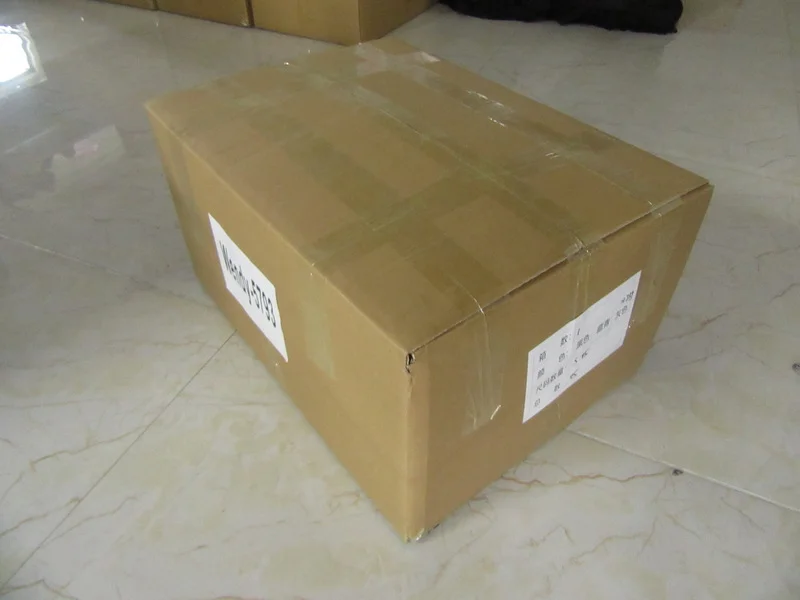
A good carton measurement record says which carton was measured and how. In our Dongguan warehouse, the Warehouse Check is where incoming cartons get measured against the supplier’s packing list, on the four points shown. When a number differs, we keep both figures until the wrong record is fixed. Send the measured record, not the old one, with your freight enquiry.
ASG published Warehouse Check workflow →
Length and volume units convert with fixed factors. 1 inch is exactly 2.54 cm, and 1 foot is exactly 0.3048 m. So 1 cubic foot is 0.028316846592 m³, and 1 CBM is about 35.3147 cubic feet. Weight and volume do not convert directly. To turn CBM into kilograms or pounds, you need the density of the goods. A freight divisor gives volumetric weight, which is a pricing number, not what the scale says.
| Conversion | Method | Meaning |
|---|---|---|
| in → cm | Multiply by 2.54 | Exact length conversion. |
| ft³ → m³ | Multiply by 0.028316846592 | Derived from the exact international foot, 0.3048 m. |
| m³ → ft³ | Divide by 0.028316846592 | 1 CBM ≈ 35.3147 ft³. |
| Physical kg ↔ CBM | Requires product density in compatible units. | No fixed conversion. |
| CBM → freight comparison kg | Total cm³ ÷ carrier divisor in cm³/kg. | Volumetric pricing comparison, not physical mass. |
| CBM → physical lb | Requires physical density, then mass-unit conversion. | CBM alone cannot give physical pounds. |
Send the carton sizes, count, weight, pickup point and destination together. Ask which pricing basis, minimum charge and validity date apply. CBM feeds the quote; it is not the price.
compare shipping quotes from ChinaPut the forwarder’s quote into your landed cost. Keep exclusions and duty inputs visible, and redo the number when the packing, route or terms change.
landed cost calculatorPick centimetres or inches. Switching units converts the sizes you already entered, so the same carton keeps the same volume.
Type the outside length, width and height of one packed carton. Don’t use the bare product size or an old carton record.
Enter a whole number of identical cartons, then press Calculate. Work out each carton size on its own.
Copy the sizes, unit, count and result into your freight enquiry. For air freight, add the carrier divisor and gross weight.
There is no fixed number, because 1 CBM of pillows weighs far less than 1 CBM of tiles. Freight uses two pricing rules instead. Sea LCL usually treats 1 CBM as 1,000 kg. Air cargo with a 6000 divisor treats 1 CBM as about 167 kg. The real weight comes from the scale.
Review the weight comparison →You can’t convert 100 kg to CBM without the density of the goods. For real volume, divide the weight by the density: 100 kg at 200 kg/m³ takes up 0.5 CBM. For air pricing, 100 kg matches about 0.6 CBM at a 6000 divisor. Measure your cartons, then use the chargeable-weight check.
Review the weight comparison →You can’t convert CBM to pounds without the density of the goods. Multiply the CBM by the density in kg/m³ to get kilograms, then multiply by 2.20462 for pounds. For air pricing, a 6000 divisor gives about 167 kg, or 367 lb, per CBM. Keep that pricing weight apart from the scale weight.
Review the weight comparison →A standard 40ft container is about 12.03 × 2.35 × 2.39 m inside, or roughly 67 CBM. A 40ft high cube is about 76 CBM, and a 20ft about 33 CBM. Cartons can’t fill every gap, so plan on about 55–58 CBM in a 40ft, 65–68 in a high cube and 25–28 in a 20ft.
Review the weight comparison →Chargeable weight is the greater of gross weight and volumetric weight. Divide the total volume in cm³ by the carrier’s divisor, usually 6000 for air cargo or 5000 for express. Compare the result with the scale weight and use the larger number. Then apply the carrier’s rounding and minimum charge.
Review the weight comparison →This CBM calculator is free for one carton size at a time. The course shows how the number fits the packing and shipping lessons.
see what the founding course covers