Problems Found After the Goods Arrive Are Too Late
The color or size is wrong when the goods land
By then the money is paid and the goods are in your country. A check in China catches the problem while the factory can still fix it.
You can’t tell what the report means
A big “PASS” can hide what was skipped. Learn to read the lot, the sample size and the open items before you release the goods.
You don’t know which inspection firm to trust
A logo tells you little. Ask what they will check, who the inspector is and what the report will show. Then compare.
What Is Quality Inspection for a China Order?
Quality inspection for a China order is a check of your goods against your written spec at a set point in production. A QC inspection, or product inspection, pulls a random sample, checks looks, size and function, and records every defect. The report tells you whether to release the goods, have them reworked or check them again.
QA (quality assurance) builds the system that prevents defects. QC (quality control) checks the finished goods, and inspection is the main QC tool. Read more in quality control vs quality assurance.
Types of Quality Inspection and When to Use Each
There are four main types of quality inspection: PPI, DPI, PSI and CLS. Each one answers a different question, so pick them by risk. A pre-production inspection (PPI) checks raw materials, parts and setup before the factory starts. Use it for a new product, a new material or a new factory.
A during-production inspection (DPI, or DUPRO) checks the first finished units while the line is running. Inspectors often book it once part of the order is made. It finds problems while the rest of the order can still change.
A pre-shipment inspection (PSI) checks the goods when production is done and most cartons are packed. Many inspectors ask for at least 80% packed. It is the most common check, and the one to tie to your balance payment.
Container loading supervision (CLS) watches the goods go into the container. The inspector checks the container, counts the cartons and seals the doors. It does not replace a product check, because the cartons stay closed.
- 01PPI · Before production
Materials, parts and setup.
- 02DPI · During production
The first units off the line.
- 03PSI · Before shipment
Finished, packed goods.
- 04CLS · At loading
Counts, cartons and container.
| Type | Timing | What it checks | Best for |
|---|---|---|---|
| PPI (pre-production) | Before mass production starts | Materials, parts and line setup | New product, material or factory |
| DPI / DUPRO (during production) | Once the first units are finished | Early defects while the rest is still being made | Big orders, long runs or past problems |
| PSI (pre-shipment) | Production done, most cartons packed | Looks, size, function, packing and count | Almost every order, before the balance |
| CLS (container loading) | On loading day | Container state, carton count and seal | Full-container shipments |
How Many Units to Check: AQL Sampling
AQL sampling tells the inspector how many units to check and how many defects are allowed. AQL stands for acceptance quality limit. The method is described in ISO 2859-1 and the related US standard ANSI/ASQ Z1.4. ISO published a new ISO 2859-1 edition in 2026; agree the edition and sampling scheme with your inspector. You look up your lot size and inspection level to get a sample size, then read the pass and fail numbers for your AQL.
Most orders use General Inspection Level II. Many consumer-goods buyers set AQL 0 for critical defects, 2.5 for major and 4.0 for minor. For example, a lot of 3,201 to 10,000 units at Level II gives a sample of 200. At AQL 2.5, the lot passes with up to 10 major defects and fails at 11. An AQL is not a defect percentage of the whole order.
Use the AQL sampling to build your plan. Confirm the numbers against the edition your inspector uses.
What Goes into a Product Inspection Checklist
A product inspection checklist lists every check the inspector will make: looks, size, function, packaging, labels, shipping marks and count. Write each item as a question with a method, a tool and a pass rule. Attach the approved sample or a photo of it. If you can’t write a pass rule yet, mark the item as open.
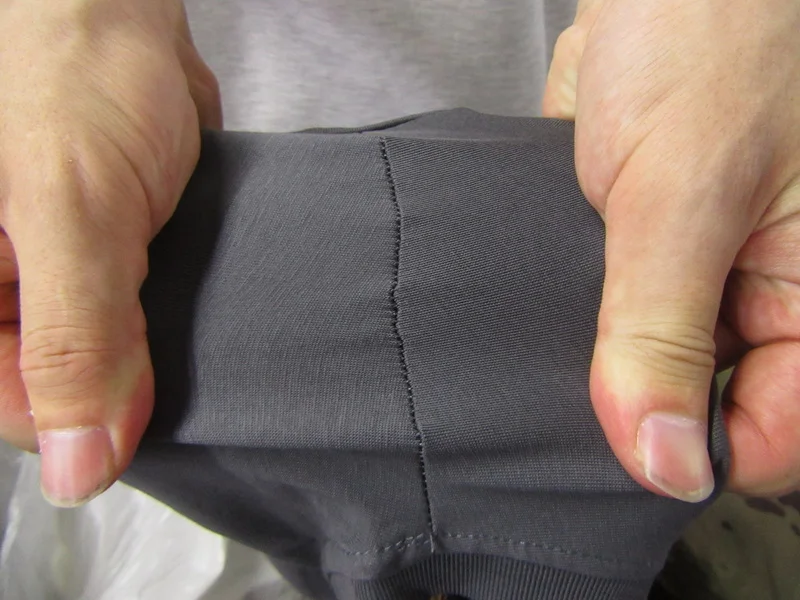
Add checks for your product type. For wood, record moisture readings and where they were taken. For fabric, check for broken threads and compare shade with a grey scale under set lighting. For plastic parts, look for sink marks and flash. For shoes, check the sole bond.
Sort defects into three classes before the inspection. A critical defect can hurt someone or break the law. A major defect makes the product fail or likely to be returned. A minor defect is a small flaw that most customers would accept. The rows marked “Example” below show the format.
| Check item | Method | Pass reference | Defect class |
|---|---|---|---|
| Looks and workmanship | Visual check under set lighting at arm’s length | Approved sample and defect list | Major or minor, by your defect list |
| Size and function | Measure with a set tool; run the function test | Drawing, tolerance and expected result | Major if it fails to work; critical if unsafe |
| Packaging, labels and marks | Compare with artwork; scan barcodes | Approved print files and carton marks | Major if wrong or unreadable |
| Count and variants | Count cartons and units; check the mix | Order and packing list | Record any shortage or wrong mix |
| Example: wood moisture and warping | Moisture meter at set points; flatness gauge | Agreed moisture range and flatness limit | Major if out of range |
| Example: fabric broken weft and shade | Visual check; grey scale under set light | Agreed defect list and shade grade | Major if visible on the front |
| Example: plastic sink marks and flash | Visual check; test the fit and edges | Approved surface sample and drawing | Minor if small; major if sharp or poor fit |
| Example: shoe sole separation | Visual check; bond test where required | Approved build and test method | Major; critical if a safety risk |
| Certificate of conformity (CoC) | Check issuer, company, model and scope | Your market’s rules | Hold until it matches the goods |
Add shipping marks and barcode checks to the checklist, so labels are checked in China, not at the port.

QC Checks Against Your Spec
QC checks only work when they are measured against your spec and an approved sample. Without a written standard, “it looks fine” and “it looks wrong” are just opinions. Give the inspector the spec version, the sample and the pass rule for each item.
Five QC checks belong on almost every order. Check the dimensions against the drawing and tolerance. Check the color against the approved sample under set lighting. Run the function test. Check the packaging against the approved box. Check every label against the artwork.
You can use your tech pack as the inspection spec. Keep its version number with the booking and the report.
How ASG Approaches Quality Control
At ASG, quality control runs in four stages: Supplier Audit, Production Monitor, Warehouse Check and Pre-Dispatch. Each stage checks something different. ASG’s published Supplier Audit is a 40-point qualification audit of a new factory before the first order. Production Monitor follows the goods while they are made.
When goods reach our Shenzhen and Dongguan warehouses, the Warehouse Check compares them with the approved sample and spec. We count the units, measure the cartons and photograph what we find. Pre-Dispatch is the last look before the parcels or cartons leave: labels, shipping marks and packing.
A photo records what we saw. It is not a lab test, and it does not prove every unit in a batch is fine. ASG coordinates supplier communication, order checks and shipping handoffs.
Hiring a Third-Party Inspection Company
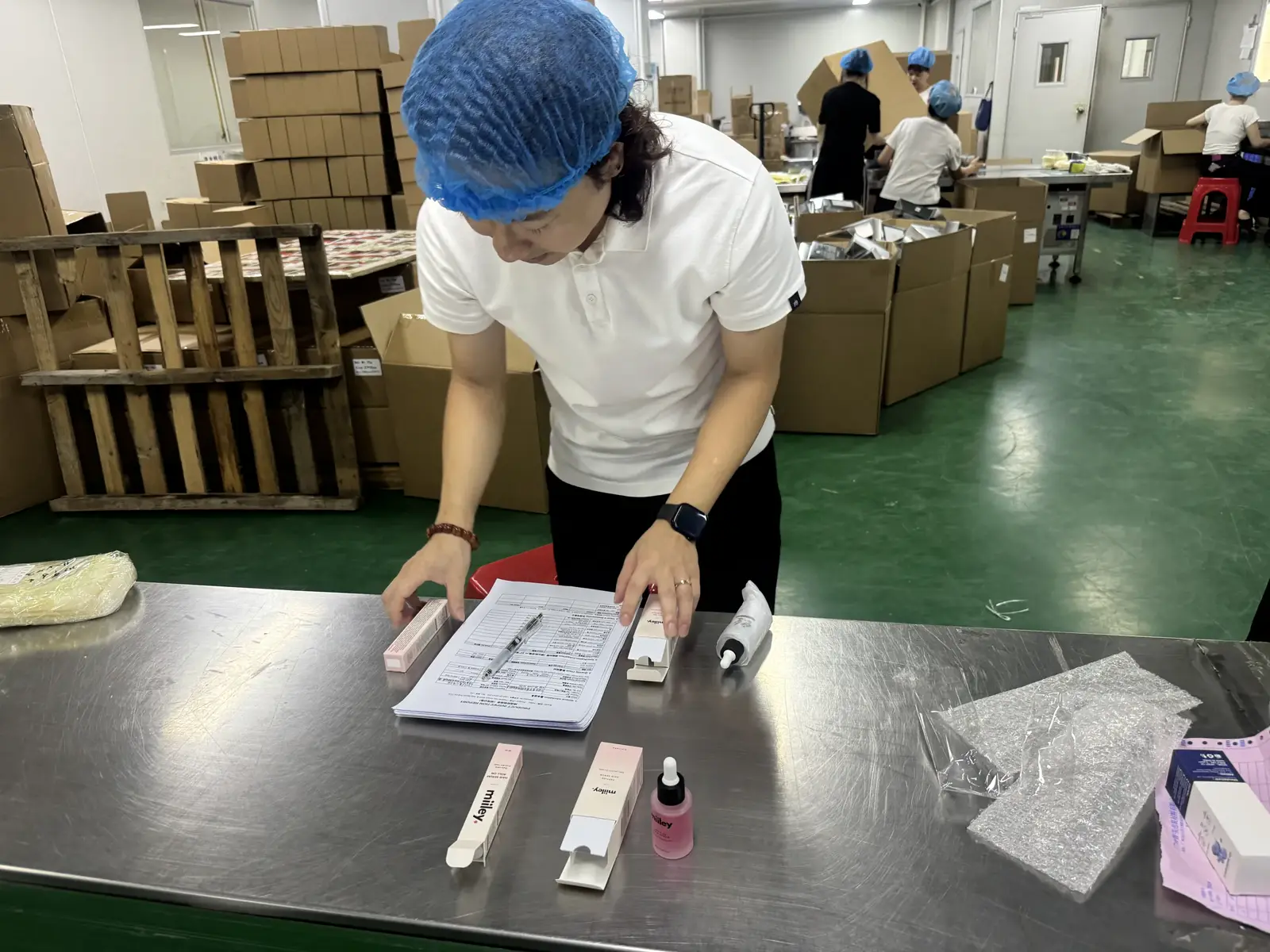
A third-party inspection company sends an independent inspector to the factory to check your goods. Most firms price by the man-day, which is one inspector for one day on site. Ask what that covers: travel, report writing and a return visit if the goods are not ready.
Ask for a sample report before you book. Check that the firm will use your checklist, your AQL and your defect list. The report should show the lot, the sample size, photos, every defect and any check it skipped.
If you need lab tests, such as material content or safety tests, book a testing laboratory. An on-site inspection does not include them. If the firm claims accreditation, check its name and scope with the accreditation body.
| Ask about | What to request |
|---|---|
| Price and scope | Man-day rate, travel, report and re-visit terms, in writing |
| Product experience | Inspectors who know your product type and its usual defects |
| Independence | Who pays the firm, and whether it also works for the factory |
| Your standard | Will they use your checklist, AQL and defect list? |
| Report content | Lot, sample size, methods, photos, defects and skipped checks |
| Accreditation and lab work | Accredited scope, and a separate lab for any tests |
How to Read an Inspection Report and What to Do Next
To read an inspection report, check what was inspected before you look at pass or fail. Find the order number, product version, lot size, sample size and date. Then compare each defect with your AQL limits, and list any check that was skipped.
You then have four choices. Release the goods if they meet your limits. Ask for rework if the defects can be fixed, then reinspect the fixed lot. Or accept a small deviation as a written concession, but never for a safety or legal issue.
If a defect keeps coming back, find the root cause. Ask “why?” five times (the 5 Whys), or sort the causes on a fishbone diagram. Then ask the supplier for a corrective action report. Inspection does not guarantee you a refund or a claim. It gives you the evidence to negotiate.
| Result | What to check | Next action | What to record |
|---|---|---|---|
| Within your AQL limits | All required checks done | Release the goods | Keep the report with the order |
| Over the limit, fixable | Which defects, how many units | Rework, then reinspect | NCR, owner and new date |
| Over the limit, not fixable | Scope of the problem | Hold; agree a remake or discount | NCR and supplier reply |
| Small deviation | Exact gap and its effect | Written concession, if safe and legal | Who approved it, and its limits |
An NCR, or non-conformance report, records a defect against a written requirement. Note the goods affected, the requirement, the evidence and what happens next. Read more in how to write an NCR report.
An 8D report, or SCAR (supplier corrective action request), asks the supplier to contain the problem, prove its root cause and fix it for good. See what to ask for in an 8D report.
Build Your Inspection Plan in 5 Steps
Build your inspection plan in these five steps. Tick each one as you go.
Decide which of the four points your order needs: before, during or after production, or at loading. Book each one early, and tie it to a payment step.
List what to check: looks, size, function, packaging, labels and count. For each item, write the method, the tool and the pass rule. Attach the approved sample.
Write down the lot size, the inspection level (usually General II) and the AQL for each defect class. The standard’s table then gives the sample size and pass numbers.
Ask what the price covers, who the inspector is and what the report shows. Lab tests are a separate job, so book a testing lab if you need one.
Read what was checked before you read pass or fail. Then release, rework, reinspect or hold. Write down who decided and why.
0 of 5 review topics marked. These are local notes, not a supplier approval or payment instruction.
Questions About Product Quality Inspection
What are the different types of inspection methods used in manufacturing?
The main methods are visual checks, measurements, function tests and lab tests. In China sourcing, they are used at four points: before production, during production, before shipment and at container loading. Pick the methods for your product and the points for your risk. Lab tests need a testing lab, not just an inspector.
What are QC inspections?
QC inspections are checks of goods against a written spec. The inspector pulls a random sample, using AQL tables to set its size. They check looks, size, function, packaging and labels, and record each defect. The report shows whether the lot passes your limits, so you can release, rework or reinspect.
What is a 3rd party inspection?
A third-party inspection is a check done by an independent company, not by the factory or your own staff. The firm sends an inspector to check your goods against your checklist and AQL plan. Ask who pays the firm and what the report covers. If it claims accreditation, check its scope.
What is a third-party inspection certificate?
It is a document from an inspection company that states what it checked and found. Read the issuer, goods, date, methods and limits. It is not a product certification or a lab test, and it does not clear customs. Treat it like a report. Read the report guide →