
What an LCL Shipment Is
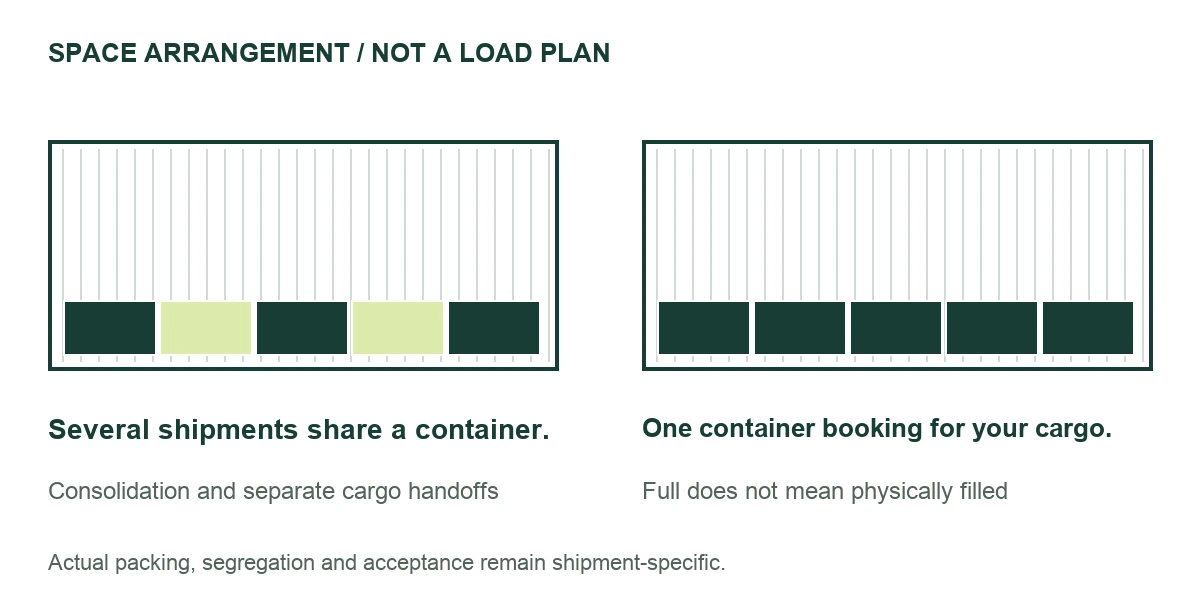
An LCL shipment (less than container load) is ocean cargo that shares one container with other shippers’ goods. A forwarder collects everyone’s cartons at a warehouse in China, packs them into one box and unpacks them at the destination. You pay for your share, by CBM or by W/M (weight or measure, whichever is higher).
FCL (full container load) means you book the whole container, full or not. You pay per container and your goods travel sealed, from loading to unloading. This guide is part of importing from China step by step.
LCL and FCL describe how the container is shared. They don’t set the trade term, who the importer is or what the quote includes. Check those on every quote.
How LCL and FCL Shipments Are Charged
LCL is charged per CBM or per W/M, with a minimum and extra handling fees; FCL is charged per container. W/M means the forwarder bills the higher of your volume in CBM or your weight in tonnes. So 1 CBM and 1,000 kg count the same. Maersk’s published LCL terms use that 1,000 kg per CBM rule.
Both quotes can leave costs out of the base rate. For LCL, ask about consolidation (CFS) fees, documents, destination unpacking and delivery. For FCL, ask about trucking, terminal handling, free time and delivery. The calculator below works only when the LCL rate is a flat price per CBM.
| Arrangement | Charging basis | Common additions to clarify | Volume decision |
|---|---|---|---|
| LCL | Per CBM or W/M, with a minimum. | Consolidation, handling, documents, destination unpacking and delivery. | Use the full charging basis from the quote. |
| FCL | Per container, by type and route. | Trucking, terminal charges, free time and delivery. | Check the cargo fits, then compare totals. |
Shipping Container Sizes: 20ft, 40ft and 40ft HC
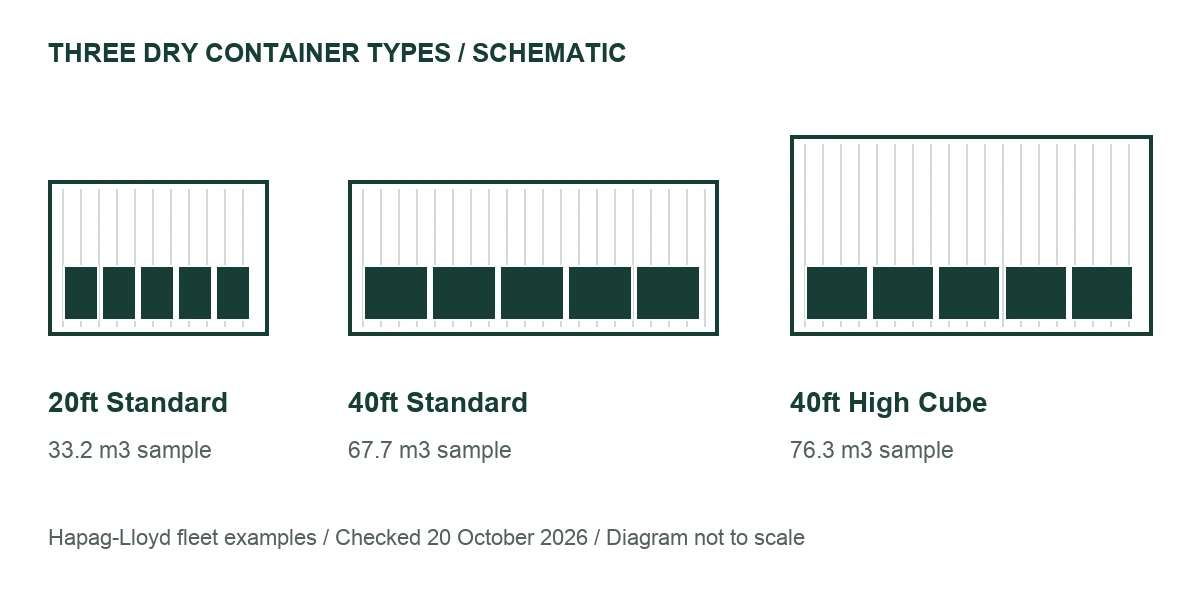
A 20ft container holds about 33 m³ inside, a 40ft about 67 m³ and a 40ft high cube about 76 m³. In practice, you load about 25–28, 55–58 and 65–68 CBM. Carton sizes, pallets, gaps and bracing take up the rest.
The 40ft HC is about 30 cm taller than a standard 40ft, which suits light, bulky goods. Heavy goods hit the weight limit before the space runs out, and road weight limits can be lower than the container’s payload. The figures below are Hapag-Lloyd’s published examples; the realistic load is a common industry range, not a carrier figure. Check the tare and limits of the container you are given.
| Type | Internal L × W × H | Internal capacity | Realistic load | Max payload | Source / checked |
|---|---|---|---|---|---|
| 20ft Standard | 5,900 × 2,352 × 2,395 mm | 33.2 m³ | About 25–28 CBM | 28,130 kg | Hapag-Lloyd: 20ft standard example → · 20 Oct 2026 |
| 40ft Standard | 12,032 × 2,352 × 2,395 mm | 67.7 m³ | About 55–58 CBM | 28,750 kg | Hapag-Lloyd: 40ft standard example → · 20 Oct 2026 |
| 40ft HC · high cube | 12,032 × 2,350 × 2,700 mm | 76.3 m³ | About 65–68 CBM | 28,600 kg | Hapag-Lloyd: 40ft high cube example → · 20 Oct 2026 |
Measure Your Total CBM First
To get your total CBM, multiply each carton’s length × width × height in metres, then multiply by the number of cartons. Add up each carton size. A 0.6 × 0.4 × 0.4 m carton is 0.096 CBM, so 200 of them make 19.2 CBM.
Record the gross weight at the same time, including pallets if they ship with the goods. Use the tool to calculate your CBM. If packaging changes, measure again before you compare quotes.

When FCL Becomes Cheaper Than LCL
FCL becomes cheaper than LCL at the break-even CBM: the volume where both full costs are equal. Below it, LCL costs less. Above it, FCL costs less. Use one currency and the same start and end points in both quotes, and count each extra fee once.
Example only: LCL at $90 per CBM plus $250 in fixed fees, against a 20GP at $1,800 plus $300 in fixed fees. The break-even is (2,100 − 250) ÷ 90 = 20.6 CBM. At 15 CBM, LCL costs $1,600 and FCL costs $2,100, so LCL wins. These are teaching figures, not market prices.
Rates change by route and season, so rework the break-even from current quotes each time. As a rough guide, start comparing both once you pass about 13–15 CBM. If your cargo is heavy or needs more than one container, run a separate comparison.
LCL total = rate per CBM × CBM + LCL fixed additions
FCL total = container base + FCL fixed additions
Break-even CBM = (FCL total − LCL fixed additions) ÷ LCL rate per CBM
Enter the figures from your two quotes. Blank costs count as unknown.
- LCL recorded total
- FCL recorded total
Compares cost for one container only. It doesn’t check fit or book anything. Nothing leaves your browser.
LCL vs FCL: Transit Time, Handling and Damage Risk
LCL usually takes longer and gets handled more than FCL, because cargo is packed and unpacked at warehouses on both ends. That typically adds several days to a week, and more if the box waits to fill. FCL travels sealed but needs enough cargo to justify the box.
More handling means more chance of crushed or mixed-up cartons, so pack LCL cargo for it. One customs exam can hold the whole shared container. Ask each forwarder for its cut-offs and who sends updates. Photograph cartons before pickup, so any damage can be traced.
| Risk / event | LCL | FCL | Response |
|---|---|---|---|
| Handling | Packed and unpacked at both ends. | Loaded and unloaded once. | Use strong cartons and photo records. |
| Timing | Waits for the cut-off and fill; unpacking adds days. | Fixed sailing; you control the loading date. | Ask for a door-to-door estimate. |
| Examination / holds | One exam can hold the whole box. | Only your cargo is affected. | Ask how holds are reported. |
| Inventory | Ships smaller batches sooner. | Waiting to fill a box delays stock. | Weigh stock timing against cost. |
Consolidating Several Suppliers Before You Book
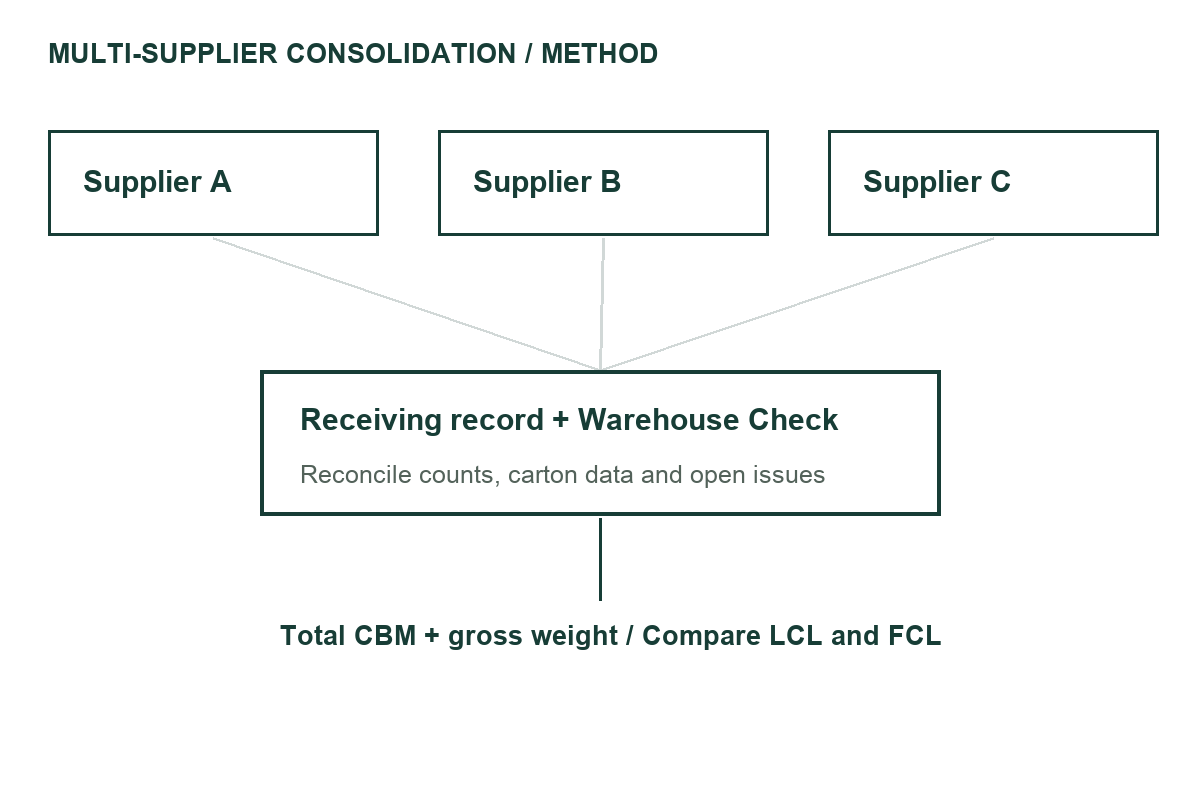
With several suppliers, bring their cargo into one warehouse first, then pick LCL or FCL based on the combined CBM. Three small LCL loads can become one cheaper container.
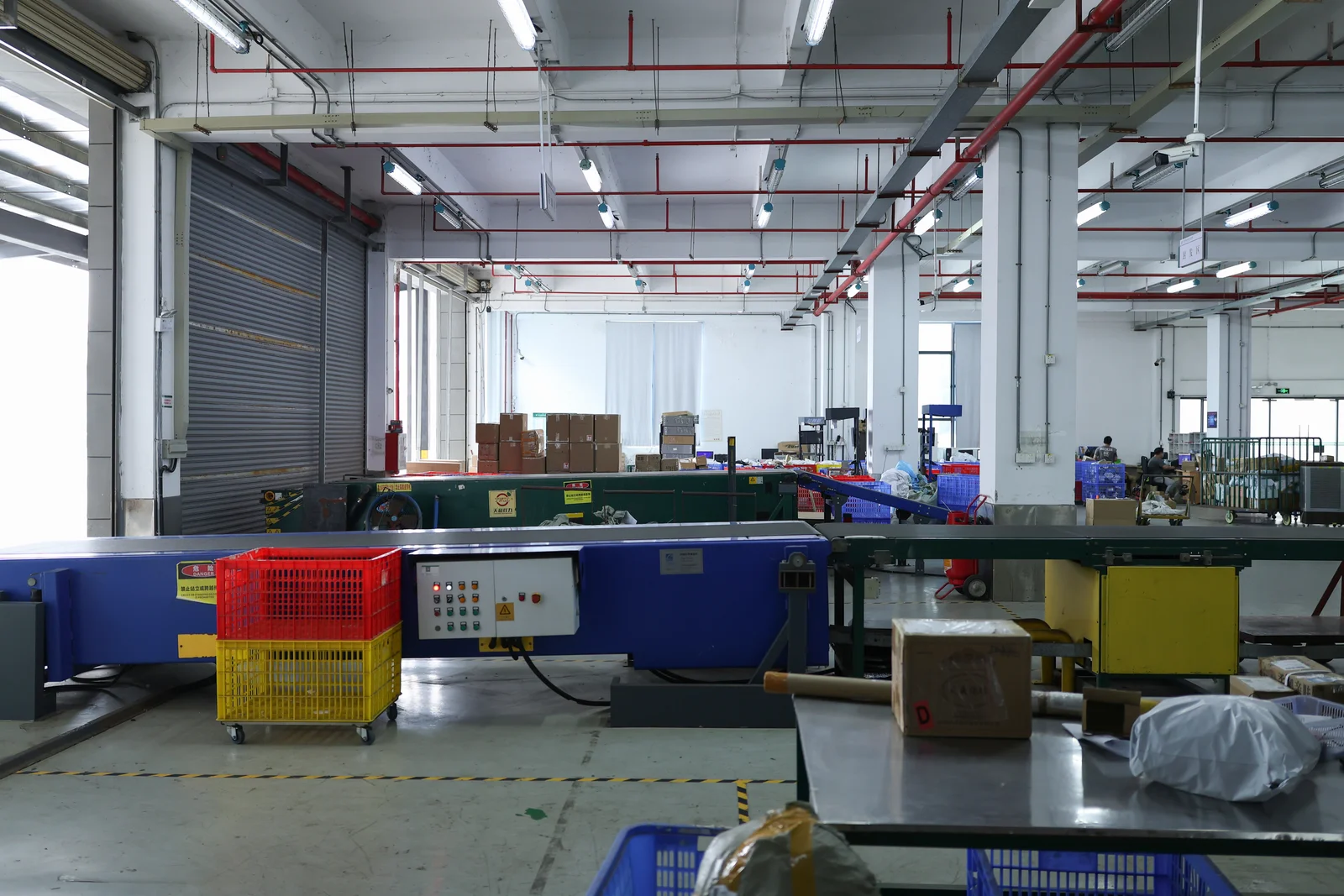
At ASG, goods from different factories arrive at our Shenzhen and Dongguan warehouses. Each delivery goes through our Warehouse Check, the third of our four QC stages. We count the cartons, measure and weigh them, check the marks and photograph any damage. Then we total the CBM and weight before you ask for quotes.
Keep one line per supplier: order number, carton count, sizes, gross weight and any open issue. Update the combined packing list after any repacking.
Download the LCL vs FCL Break-Even Sheet
The LCL vs FCL break-even sheet does the same maths as the calculator, in Excel. It has a blank sheet for your quotes and a worked example using the figures above. Keep quote dates, validity and open questions beside the numbers.
Before You Book: 5 Checks
Packed dimensions and gross weight
Use the final packing list. Record each carton or pallet size, count and gross weight. Fix gaps between the supplier’s figures and your own measurements.
Total CBM
Add up the measured volume. Ask whether the quote bills by CBM or by W/M. Heavy cargo can bill on weight instead.
Origin gateway
Name the origin port, such as Yantian or Ningbo, and the pickup address. A different port changes the China-side trucking and fees.
Two quotations on one basis
Match currency, cargo, start and end points, and included services. Add each excluded cost once. Then run the break-even.
Quote validity
Note each quote’s date and expiry. Reconfirm space and price before booking. If anything changes, run the numbers again.
Questions About LCL and FCL Shipping
What is an LCL shipment?
An LCL shipment is ocean cargo that shares a container with other shippers’ goods. LCL stands for less than container load. The forwarder packs it with other cargo in China and unpacks it at the destination. You pay per CBM or W/M, plus consolidation and handling fees.
What is LCL vs FCL?
LCL shares a container with other shippers; FCL gives you a whole container. LCL is charged per CBM, FCL per container. Below the break-even CBM, LCL is cheaper; above it, FCL is. Work out that point from two current quotes, then check weight and timing.
What is the difference between LCL and LTL shipping?
LCL is shared ocean freight; LTL is shared truck freight. LCL means less than container load, on a ship. LTL means less than truckload, on the road. One shipment can use both: LCL from China to a U.S. port, then LTL to your warehouse.
How to calculate LCL charges?
Multiply your chargeable volume by the LCL rate, then add the fixed fees. Chargeable volume is the higher of CBM or weight in tonnes (W/M), subject to a minimum. Add origin fees, consolidation, documents, destination unpacking and delivery. Check each quote for exclusions.
How much does an empty 20ft container weigh?
An empty 20ft container weighs about 2,200–2,400 kg. Hapag-Lloyd’s 20ft example, checked 20 October 2026, lists 2,350 kg. Use the TARE figure printed on your container’s door. More detail: how much a 20ft container weighs.