
Free Lesson P01 on Defining Your Purchase Task
Three quotes come back for a foldable storage bag: 12.80 yuan, 14.50 yuan and US$2.35 per unit. Before you pick one, you need to know what each quote covers. By the end of this lesson, you will have a one-page purchasing brief and a five-question checklist for quotes.
Written lesson · free to read now
Read the English text draft and try the editable worksheet. Video is not yet released.
Before You Start
0 of 4 ready.
What You Will Decide
- See why three quotes with different minimums, notes and currencies cannot be ranked yet.
- Check the five conditions that most often get mixed up in a quote: tax and invoicing, platform, MOQ, lead time, and packaging and logo.
- Fill in a ten-line purchasing brief where every number says whether it is a record, a proposal, an estimate or a target, and every gap says “to verify.”
- Check supplier replies with five questions and turn each vague reply into one specific follow-up question.
P01 Video Status
The P01 video is not available. Read the free written lesson below and try the editable worksheet.
Lesson Notes: Make the Request Actionable
All quotes and numbers in this lesson are fictional teaching figures, not market prices or real orders. You are looking for a supplier for a foldable storage bag, and three quotes have come back: 12.80 yuan per unit, 14.50 yuan per unit and US$2.35 per unit. Which one would you look at first? Write down your first reaction before reading on.
Open the three quotes
Factory One wants at least 1,000 units, with a note saying “in stock.” Factory Two accepts 500, with a note saying logo printing is available. Factory Three has a minimum of 300, and its quote names delivery terms at Ningbo port. Do the three quotes specify the same fabric and size? Is packaging included? Is the logo already in the unit price, or charged extra? Converting the currencies only changes the units; the missing conditions are still missing. Instead of guessing, write “to verify” and send one specific question, for example: “Please itemize the individual packaging, logo printing and plate fee, and tell me which are already included in the unit price.”
Five conditions that get mixed up in a quote
Tax and invoicing: write down who is buying, who is exporting and what invoice or documents are needed, then ask for a written quote on that basis; actual tax treatment goes to a qualified professional. Platform: the same supplier can list a yuan price on 1688 and a US dollar price on Alibaba.com, so put specifications, quantity, tax invoice, packaging and delivery point into one table. MOQ: if 500 units cost one more yuan each plus a 300-yuan plate fee, this order costs 800 yuan more; record the unit price change, the one-off fee and whether it is charged again. Lead time: ask when the clock starts and where it ends. Packaging and logo: list the individual bag, color box, hang tag, barcode and carton marks separately, write zero only for items confirmed as not applicable, and write “to verify” for anything still waiting for a reply.
Write the brief, line by line
Fictional teaching case A, the same practice storage bag project: the current supplier delivered 1,500 units last quarter. Five zipper complaints came in; the affected orders, batches and causes still need checking. The team wants a backup source and proposes a trial order of 500 units. If things go well, it estimates a possible need of 1,500 units per quarter, which is an estimate, not a repeat-order promise. Arrival at its US warehouse within six weeks is an internal target whose feasibility has not been confirmed. The manager has approved sample costs up to USD 80, but whether that includes sample shipping and whether the limit is per occasion or cumulative still need checking. The bulk order needs separate approval. The ten lines are: the problem to solve, product requirements, quantity, delivery point, tax invoice and export arrangement, packaging and labeling, timing, budget and authority, records, assumptions and unknowns, and the next step. For the first line, write: “Check the zipper feedback, assess one backup supply source, and decide whether a trial order is worthwhile.” That line does not assume you have to switch suppliers.
Keep each number’s status and authority visible
The 1,500 delivered units are a delivery record given in the exercise. The 500 units are a purchasing proposal. The five zipper complaints are leads to investigate: match each one to a specific order and batch before using a defect rate. Schedule the six-week target backwards through sample, logo artwork, bulk production, shipping and receiving. A good price does not turn permission to ask for quotes into permission to pay. For the next step, write who does what, for example: the operations lead matches the five pieces of feedback to orders and batches; the purchasing lead sends one unified specification and collects quotes that answer all five questions.
Check replies with five questions
Is the specification the same version? Are the quantity and price tiers clear? What is included: tax invoice, packaging, logo, samples and plate fees? Where, and when, is it delivered? How long is the quote valid, how is payment made, and in what currency? Next to every tick, point to at least one reply or one quote. When a factory says “Logo is possible, details to be discussed,” keep the logo as “to verify” and ask for the plate fee and per-unit printing cost to be itemized. The checklist only finds inconsistencies and gaps; the factory’s actual capability has to be checked separately.
| Statement | Current status | Next check |
|---|---|---|
| 1,500 units delivered last quarter | Past record supplied by the exercise | Keep the source, product version and delivery scope |
| Trial order of 500 units | Proposal for inquiry and evaluation | Check need, MOQ, cost, trial purpose and approval |
| Possible 1,500 units per quarter later | Estimate | Do not promise repeat orders |
| US warehouse arrival within six weeks | Internal target | Check samples, production, transport and receiving |
| Five zipper complaints | Feedback; affected batches and cause unknown | Match reports to orders and batches before using a rate |
| Sample authority up to USD 80 | Fictional authority; scope unclear | Confirm whether sample shipping is included and whether the limit is per occasion or cumulative |
Practice: Write and Revise a Purchase Task
Fictional case B, AU300: an Australian seller wants quotes for 300 silicone ice trays with a logo, with a target of arrival in Sydney within eight weeks. Budget and tax invoice/export arrangements have not been established. The 300 units are an inquiry quantity, not an approved order. Purchase approval and payment authority are unconfirmed. Record what the request says, what is proposed and what still needs a reply. Do not infer product compliance from its name.
- Write whatever you can already fill in across the ten worksheet fields, keeping inquiry quantity, arrival target, unknown budget and unconfirmed authority distinct.
- List the things to verify, each saying who to ask and what to ask.
- Write one specific follow-up question you would send the supplier.
The worksheet stays in your browser. Export answers before leaving; it does not upload them or submit them for review.
Second round: revise without erasing version 1
One new detail arrives: the seller says the logo artwork has not been finalized. Identify the affected brief fields. The 300-unit inquiry quantity and unconfirmed purchase approval and payment authority were already known in round one; retain them.
What changes in the artwork reference and production start conditions, and what stays unconfirmed?
Compare a reference answer after you finish
Keep 300 as an inquiry quantity and eight weeks as an arrival target whose feasibility needs checking. Keep budget, tax invoice/export arrangements, purchase approval and payment authority unconfirmed. Do not copy the USD 80 sample authority from the storage bag project in case A; these are two different projects, each with its own authority. Build the follow-up around one gap, for example: “Please confirm whether 300 units meet the minimum order quantity for this product. List unit and one-off charges separately, and identify the logo and packaging requirements those prices cover.” After the new detail, update the artwork reference and open production start conditions. Preserve version 1, save version 2, and explain the changed fields and reasons. New artwork information does not approve the quantity, spending or arrival date.
Where P01 Fits in the Full Course
P01 begins the six-stage, 22-lesson curriculum. Its purchasing brief and five-question quote checklist carry forward: the next lesson turns phrases such as “good quality” and “smooth zipper” into product requirements you can check, and lesson nine puts the complete quotes into the cost model.
- Stage 1 · 3 lessonsDefine the task
Clarify the product, the limits and what still needs checking.
- Stage 2 · 4 lessonsVerify candidates
Find comparable suppliers and check what their claims prove.
- Stage 3 · 3 lessonsModel the decision
Compare quotes, total cost and cash before committing.
- Stage 4 · 4 lessonsPrepare a trial order
Test samples, negotiate terms and set a bounded trial.
- Stage 5 · 5 lessonsControl delivery
Manage batch quality, freight, milestones and exceptions.
- Stage 6 · 3 lessonsReview and reorder
Use results and new evidence to decide what happens next.
Who Teaches the Course
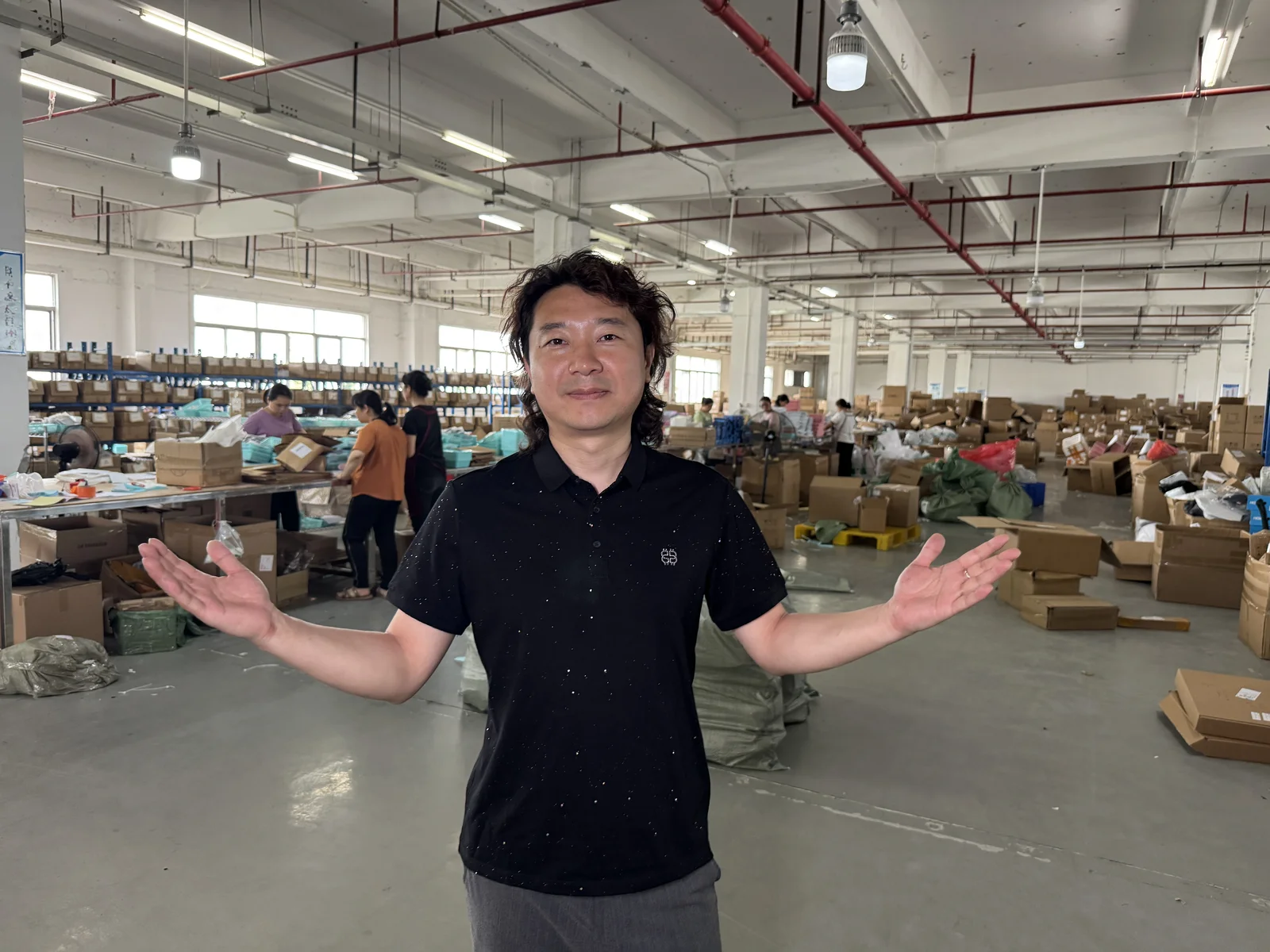
Janson Wang is Founder of ASG, working on sourcing, quality checks, warehousing and fulfillment from China. He has spent his career on the China side of cross-border e-commerce: sourcing, quality control and shipping orders out of China every day.
He is President of the Dongguan E-Commerce Association and guest lecturer at Wuxi Institute of Commerce, Dongguan City University and Guangdong University of Science and Technology. The Academy lessons come from the same warehouse floor his team works on.
ASG team profile →Read more about Janson Wang and the ASG team.
Ask About the P01 Video
The written lesson and worksheet are free now. No release date for the P01 video is promised. You can ask about it by email; this page does not subscribe you to automatic updates.
The written lesson and editable draft worksheet are free to use now. You can email a question about the video; there is no automatic update subscription.
- Name
- Main product category (optional)
The email button opens your email app; it does not send a message automatically. You can also write to janson@asgdropship.com. Privacy policy
Questions about ASG sourcing or fulfillment services? Contact ASG at asgdropship.com.
FAQ
Is this lesson free?
Yes. The written P01 lesson on this page is free to read without an account or payment.
Is the video available?
No. Chinese and English P01 script drafts are written in Janson’s first person, but recording, voiceover, listening checks, captions and the finished video are still ahead.
Can I use a real product?
Yes, if you remove customer and supplier confidential details. You can also use the fictional AU300 practice in case B. The exercise is practice on paper only: it does not ask you to contact a supplier, use real orders or spend money.
Is this the complete English course?
No. This page is the P01 English text and worksheet draft. Every lesson, including this one, will have a complete English edition voiced by Janson; it is still in production and review.
Continue the 22-Lesson Path
See all six stages and 22 lesson titles in the full course outline.